The One Number That Says It All
Walk into any composites shop, browse any carbon fiber catalog, or talk to any manufacturer. You'll see the same thing everywhere: PAN-based carbon fiber.
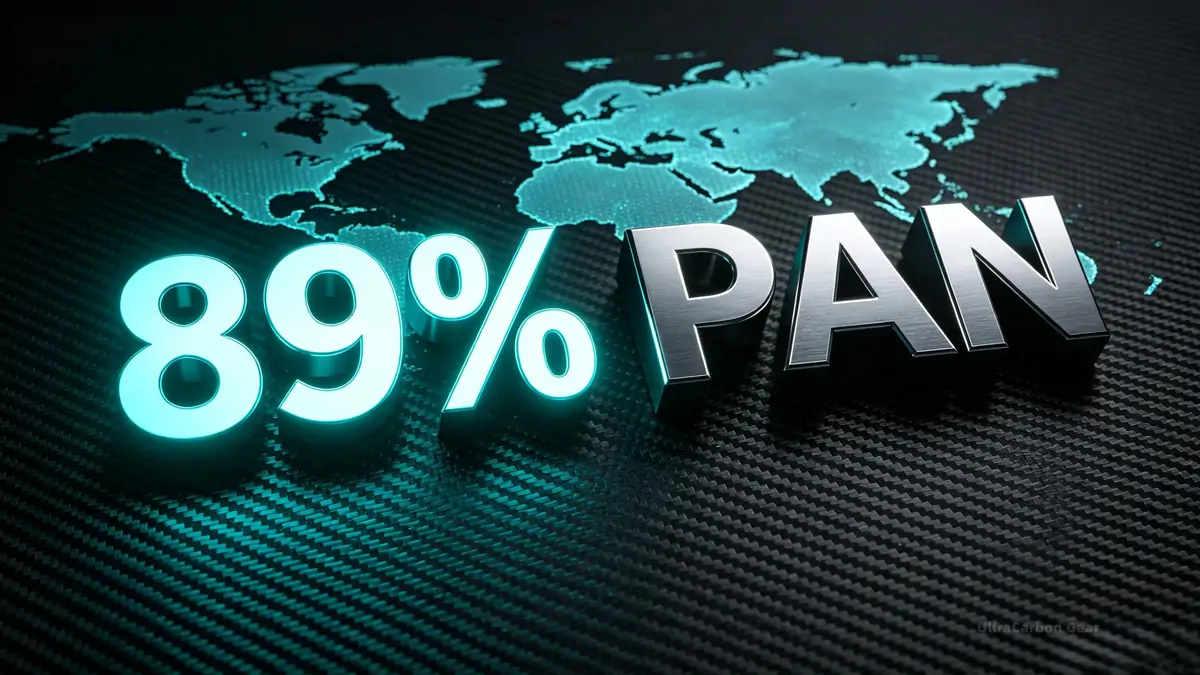
It's not a coincidence. Today, PAN-based carbon fiber accounts for roughly 89% of the global carbon fiber market – some estimates put it even higher, at over 90%. The other guys – pitch-based and rayon-based – split the rest.
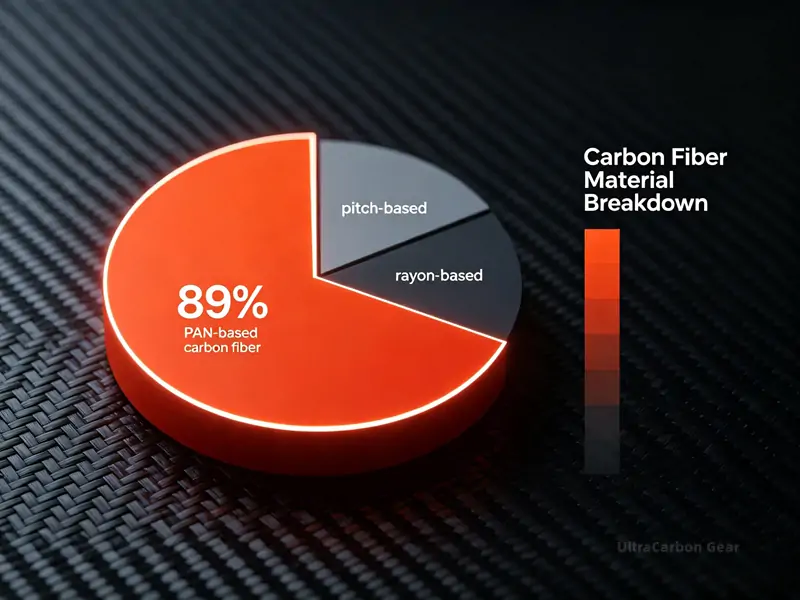
But here's the thing: that number isn't just a statistic. It's a shortcut. It tells you something important about what works, what lasts, and what's worth your money.
So let's cut through the marketing noise. Here's what PAN-based carbon fiber actually is, why it dominates, and why it probably matters for whatever you're building, buying, or dreaming up.
What Even Is PAN-Based Carbon Fiber?
Let's back up for a second.
Carbon fiber starts as a precursor – basically, the raw material that gets cooked into carbon fiber. There are three main types:
| Precursor | What It Is | Market Share |
|---|---|---|
| PAN | Polyacrylonitrile – a synthetic polymer | ~89-90% |
| Pitch | Petroleum or coal tar byproduct | Small |
| Rayon | Regenerated cellulose (plant-based) | Very small |
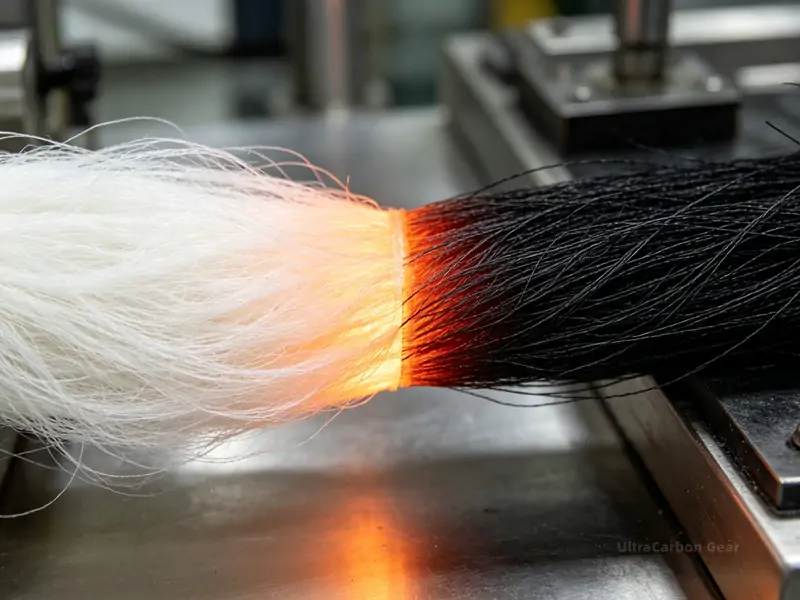
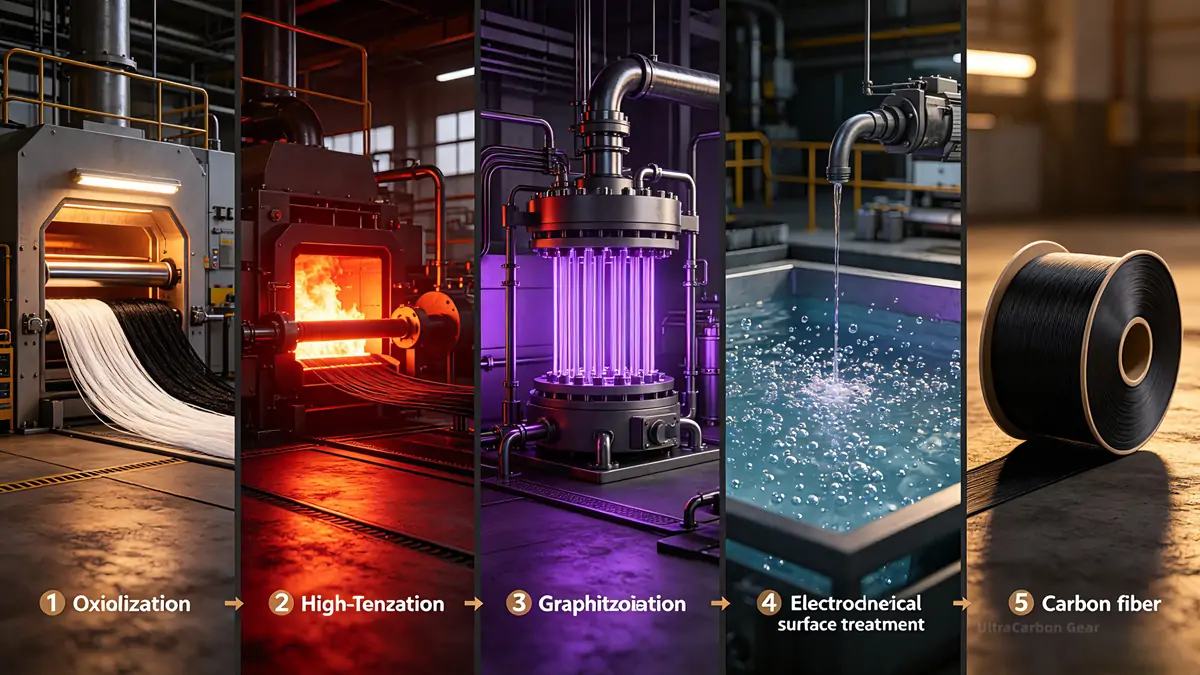
PAN is a thermoplastic polymer made from acrylonitrile. When you spin it into fibers, then heat it to extreme temperatures (up to 1500°C or more) in an oxygen-free environment, the non-carbon elements burn off. What's left? A fiber that's over 90% pure carbon with a crystalline structure that gives it insane strength-to-weight properties.
That's the simple version. The real magic is in the microstructure.
PAN-based carbon fibers have highly ordered crystalline carbon layers with amorphous regions that allow efficient stress transfer between them. Think of it like a brick wall where the bricks are perfectly aligned and the mortar is just right – strong, flexible enough not to shatter, and incredibly efficient at handling load.
Why PAN Won – The Three Reasons
1. Strength That Pitch Can't Match
Pitch-based carbon fiber is stiffer. We'll give it that. Pitch fibers can achieve ultra-high modulus (stiffness) – in some cases over 900 GPa. They're the go-to for applications where stiffness is the only thing that matters, like satellite structures or high-precision instruments.
But here's the catch: pitch fibers are brittle. They don't handle compression well. They don't handle impact well. And they break more easily under stress.
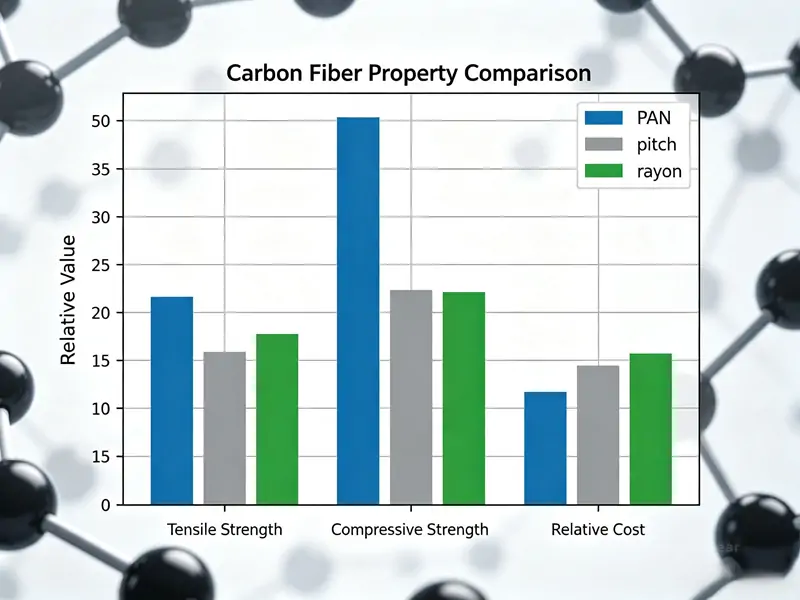
PAN-based fibers? They have higher tensile strength AND higher compressive strength than pitch-based fibers. That means they're tougher, more forgiving, and less likely to fail catastrophically. They also have higher tensile elongation at break – meaning they can stretch a little before breaking, which pitch fibers can't do.
In plain English: PAN fibers are stronger and more durable. Pitch fibers are stiffer but more fragile.
For 90% of applications – aerospace, automotive, sporting goods, wind energy – strength and durability matter more than ultimate stiffness. That's why PAN wins.
2. Better Carbon Yield = Better Value
Rayon-based carbon fiber was the original. It's what Edison used for his lightbulb filaments back in the day. But here's the problem: rayon has terrible carbon yield.
Rayon precursors give you only about 20% carbon content after processing. PAN precursors? About 55%. That means for every pound of raw material, PAN gives you nearly three times as much usable carbon fiber.
More yield = lower cost per pound. Lower cost = more accessible. More accessible = more applications. More applications = more investment. More investment = better technology. Better technology = even better performance.
It's a virtuous cycle that PAN started in the 1960s and never looked back.
3. It's Been Perfected for 60+ Years
Here's something people don't talk about enough: PAN-based carbon fiber has had a 60-year head start.
The story starts in 1959, when Dr. Akio Shindo at the Government Industrial Research Institute in Osaka, Japan, discovered that PAN fibers needed to be oxidized before carbonization to produce high-quality carbon fiber. By 1961, he had published results showing PAN-based carbon fibers with a tensile modulus three times higher than anything seen before.
By 1963, scientists in the U.K. had patented the process for producing even higher modulus PAN-based carbon fibers. In 1969, Toray developed copolymer PAN precursor and combined it with Union Carbide's carbonization technology to produce high-strength, high-modulus carbon fiber. Toray launched commercial PAN-based production in 1971.
That's over half a century of continuous R&D. Process optimization. Quality control. Cost reduction. Performance improvement.
Toray's T1200 – a PAN-based carbon fiber – now achieves 8.0 GPa tensile strength. That's nearly double what was possible just a couple of decades ago. And it keeps getting better.
Pitch and rayon? They haven't seen anywhere near that level of investment or innovation.
Where PAN Shows Up (Hint: Everywhere)
Because PAN-based carbon fiber offers the best balance of strength, weight, durability, and cost, it's the default choice across almost every major industry.
Aerospace & Defense – Over 35% of global PAN-based carbon fiber consumption goes here. Boeing 787. Airbus A350. Military aircraft. Drones. Missiles. If it flies and needs to be light and strong, it's probably PAN-based.
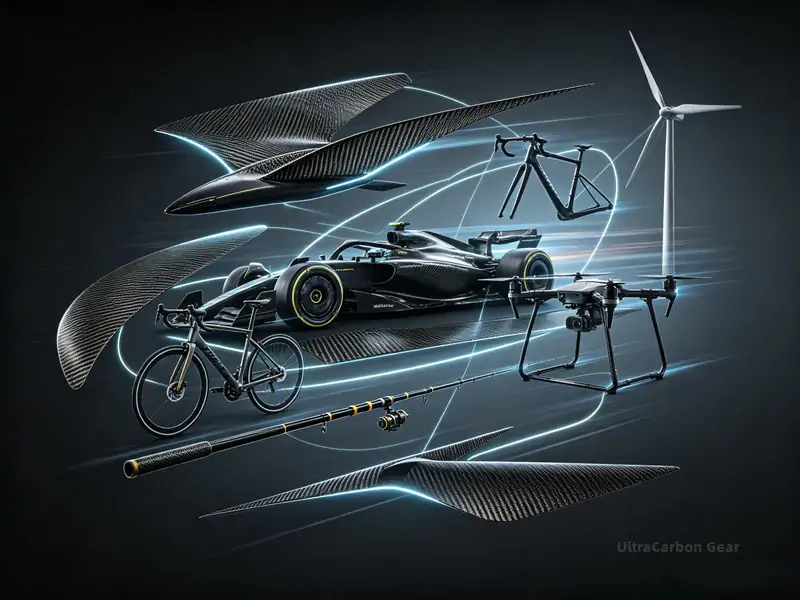
Automotive – Electric vehicles, high-end sports cars, racing. Lightweight means better range, better acceleration, better everything. PAN carbon fiber is increasingly used for structural components in EVs.
Wind Energy – Turbine blades that stretch longer than a football field need materials that are light, strong, and fatigue-resistant. PAN delivers.
Sporting Goods – Fishing rods, golf clubs, tennis rackets, bicycle frames, ski poles. If it's carbon fiber and you use it for fun, it's almost certainly PAN-based.
Drones & RC – FPV frames, quadcopter parts, propellers. Lightweight + strong = longer flight times and better handling.
What This Means for You
Here's the bottom line.
If you're buying carbon fiber parts – whether it's a fishing rod, a drone frame, a bike, or a car part – you're almost certainly buying PAN-based carbon fiber. And that's a good thing. It means you're getting the most tested, most reliable, best-performing carbon fiber on the planet.
But not all PAN-based carbon fiber is created equal. Quality varies by manufacturer, by processing, by quality control. That's where we come in.
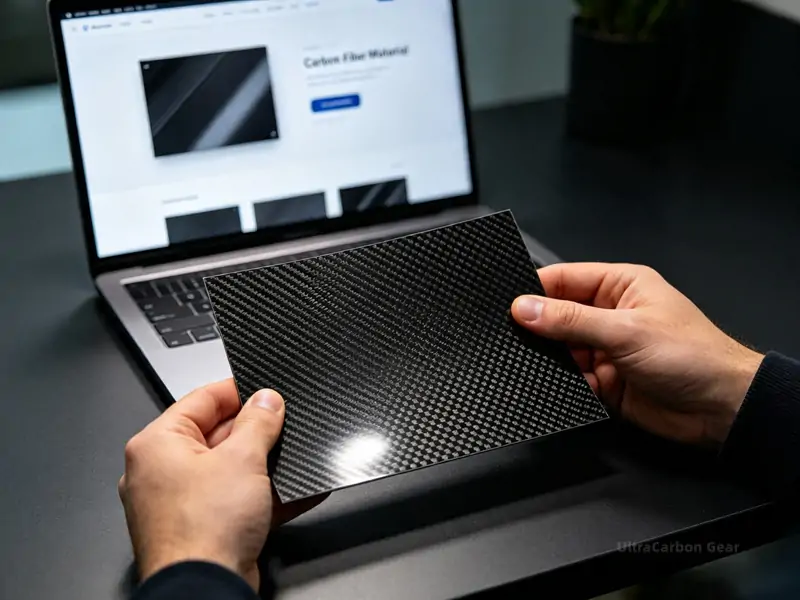
We source our carbon fiber from top-tier manufacturers – the same names you'll find in aerospace and defense supply chains. Toray. Hexcel. Mitsubishi. SGL. We don't cut corners on raw materials, and we don't cut corners on quality.
When you buy from us, you're getting:
- Proven performance – materials that meet aerospace-grade standards
- Real specifications – not marketing fluff
- Consistent quality – batch after batch, part after part
And we're not just selling parts. We're here to help you figure out what you actually need. Confused about tow size? Not sure which weave pattern is right for your project? Wondering whether you need standard modulus or intermediate modulus? Just ask.