Hey friend, ever wondered why carbon fiber is both incredibly light and ridiculously strong? The secret isn't magic — it's a sequence of five precise, almost meditative steps that turn a fluffy white fiber into a material that outperforms steel. I'm going to walk you through the carbon fiber manufacturing process just like I would over a coffee. No boring textbook stuff — I'm talking real details, the stuff you can't unsee once you know it. And yes, at the end, I'll show you how to get your hands on the very best carbon fiber we produce right here.
What Happens Before the Ovens? (Spoiler: It's All About the PAN)
Before the heat hits, we start with a precursor fiber called PAN — polyacrylonitrile. Think of it as the raw dough. It's soft, white, and made of long molecular chains that are, frankly, a disorganized mess. Our job is to align those chains and then lock them into place. That's where the real dance begins.
Step 1: Oxidation — The Slow Bake That Transforms the Fiber
This is the step where most people get curious and start typing long-tail questions like "why does carbon fiber need to be oxidized first?" or "what temperature is used in carbon fiber oxidation?" I love these questions. Let me answer them.
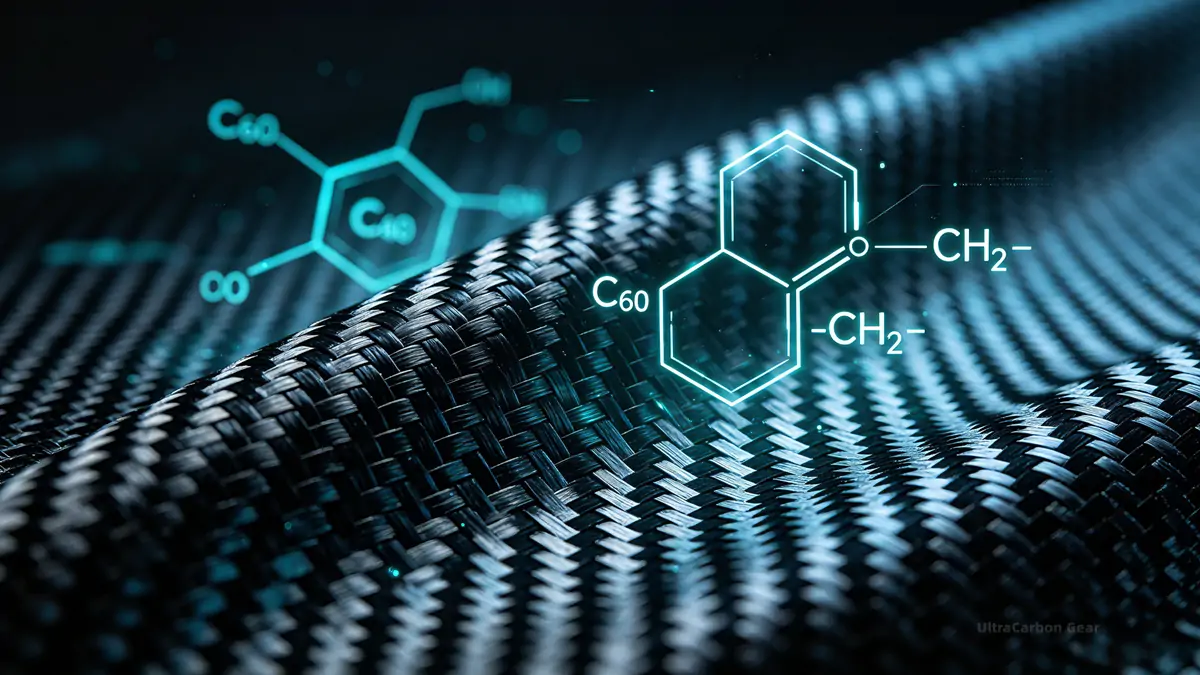
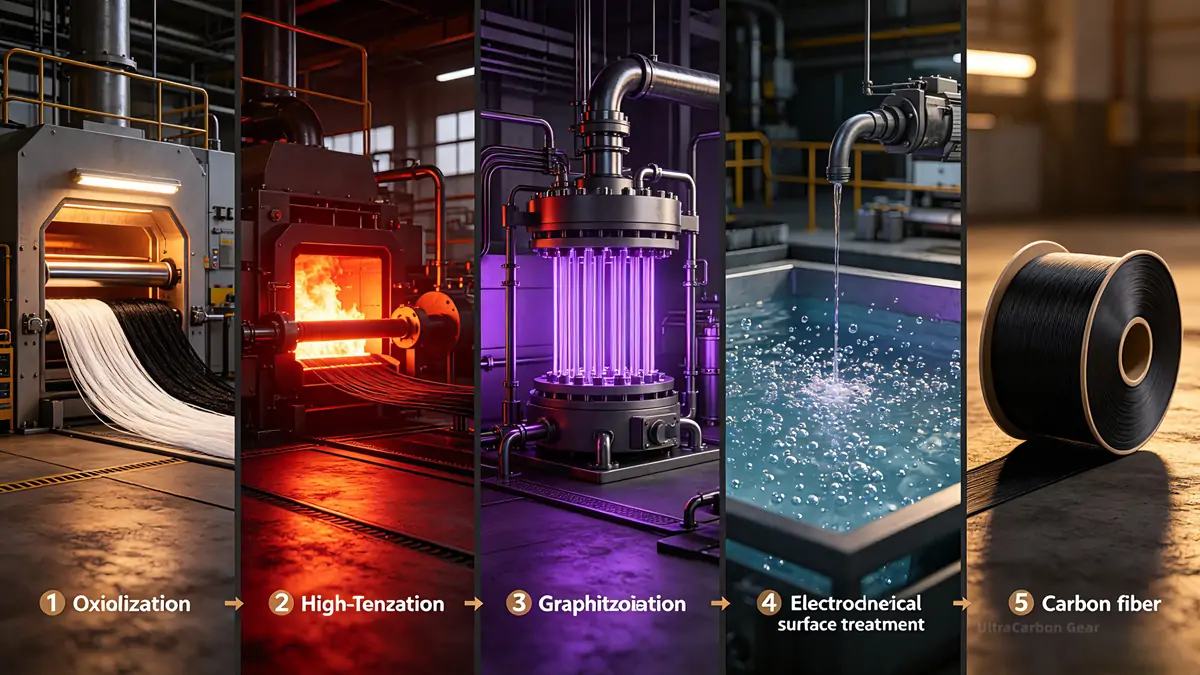
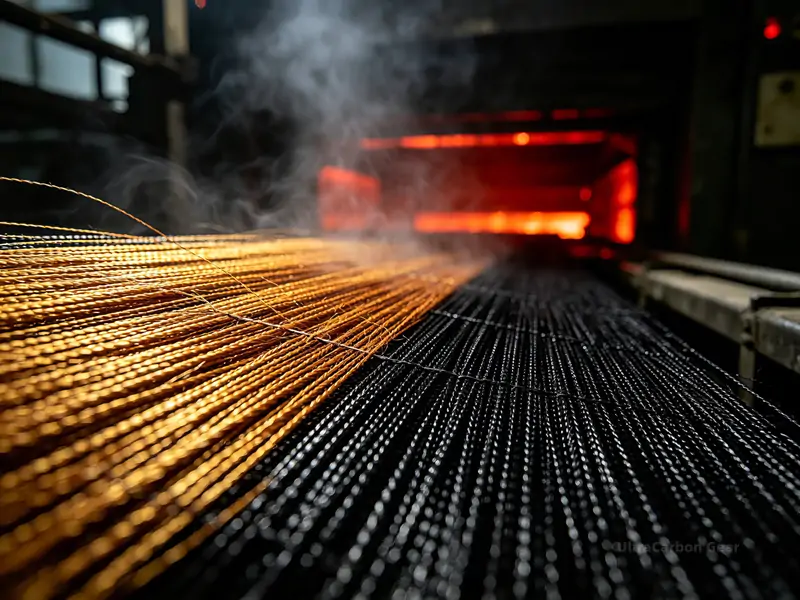
Oxidation is a low-and-slow process. We stretch the white PAN fibers under tension and heat them in air to between 200°C and 300°C (about 392°F–572°F). No, we don't just blast them with heat. That would melt them into a useless lump. Instead, we hold them precisely, letting oxygen from the air slowly latch onto the molecular chains. This transforms the PAN from a thermoplastic — something that would just melt — into a thermoset, non-meltable ladder structure. It's like turning dough into a rigid pretzel that can survive the furnace later.
Here's a detail most people miss: during oxidation, the fiber changes color dramatically — from white to cream, then brown, then copper, and finally jet black. We control this so tightly that if you saw a batch that didn't follow that exact color path, you'd know something was off. The process takes hours, not minutes. At our facility, we use huge precision-controlled ovens with multi-zone heating to guarantee every single filament sees the same thermal history. That's why the carbon fiber you buy from us is consistently flawless — no weak spots, no hidden surprises.
Step 2: Carbonization — Heating to Extreme Temperatures (Not for the Faint-Hearted)
Now the fiber is black and stable, but it's still not carbon fiber. This is the stage people wonder about when they ask "how hot does carbonization get in carbon fiber manufacturing?" Short answer: very. Really very.
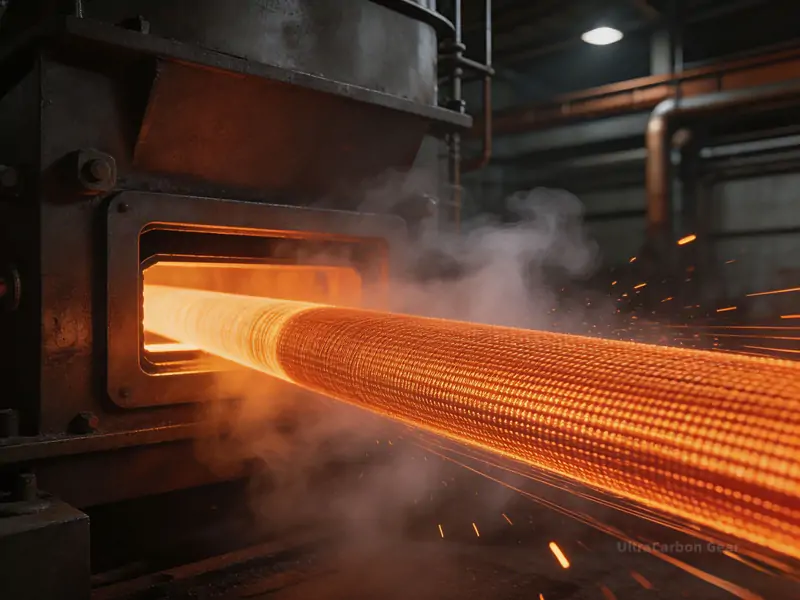
The oxidized fiber enters a carbonization furnace, where it's heated in an oxygen-free atmosphere — usually pure nitrogen — to temperatures ranging from 1,000°C up to around 1,800°C (1,832°F–3,272°F). Oxygen is the enemy here. Any oxygen at these temperatures would simply burn the fiber away. So we flood the furnace with inert gas, and we also control the tension exquisitely.
Inside the furnace, the non-carbon atoms — hydrogen, nitrogen, leftover oxygen from the oxidation step — are driven off as gases. What's left is a fiber that's over 90% carbon, with the graphite-like crystallites beginning to align along the fiber axis. This alignment is what gives carbon fiber its famous tensile strength. Picture a bundle of tightly stretched microscopic ropes all pulling in the same direction. That's your carbon fiber now. The process takes only a few minutes per section of fiber, but the engineering behind maintaining a perfect atmosphere and temperature profile is massive. Our carbonization lines use low-mass muffle tubes and advanced sealing technology to keep the oxygen out, which means the fiber you receive is as pure and strong as it gets.
Step 3: Graphitization — Taking Carbon to the Next Level for Ultra-High Modulus
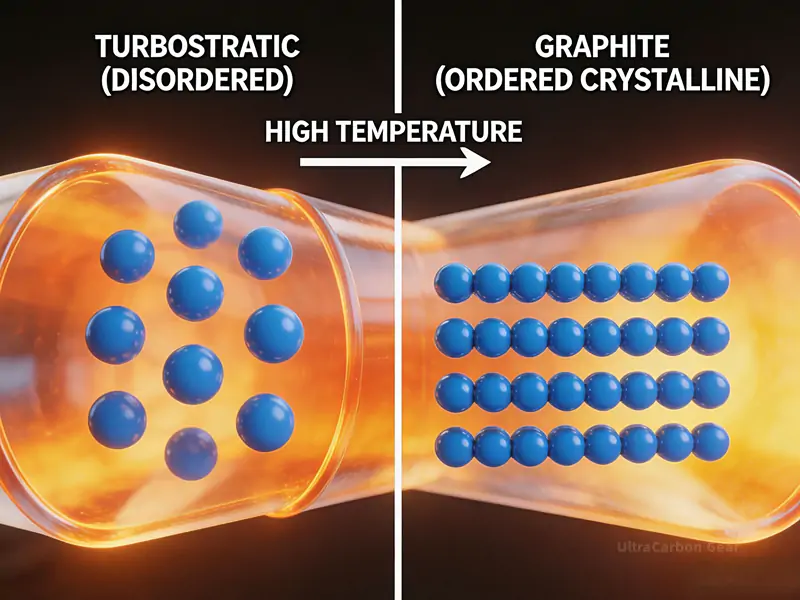
Not all carbon fiber goes through graphitization. But when we need to produce high-modulus carbon fiber — the kind used in satellites, race car chassis, or premium sports equipment — we turn up the heat even more. This step answers the question "what is the difference between carbonization and graphitization?" and "why does graphitization increase modulus?"
Graphitization happens in an inert atmosphere just like carbonization, but this time the temperature rises to 2,500°C–3,000°C (4,532°F–5,432°F). At these insane temperatures, the carbon atoms have enough energy to reorganize themselves into larger, more perfectly stacked graphite crystallites. The orientation along the fiber axis improves dramatically. The result: the fiber's stiffness (modulus) skyrockets, while its strength may stay similar or slightly drop. This is why you see ultra-high-modulus carbon fiber grades with numbers like M50J or M60J — they've been graphitized.
Here's a practical tip for you: if your project demands absolute rigidity and minimal deflection — say, a long drone arm or a stiff camera slider — you want graphitized carbon fiber. If you need maximum impact resistance and strength, standard carbonized fiber is often better. In our shop, we label everything clearly so you can pick exactly the right type. I personally love explaining this to customers because once you understand the difference, you'll never buy blind again.
Step 4: Surface Treatment — Etching for a Better Bond
Here's where many manufacturers cut corners, but we don't. After carbonization or graphitization, the fiber surface is smooth and chemically a bit inert. Raw carbon fiber doesn't bond well to resin right out of the furnace. That leads to a common long-tail question: "why does carbon fiber need surface treatment?" and "how is carbon fiber surface treatment done?"
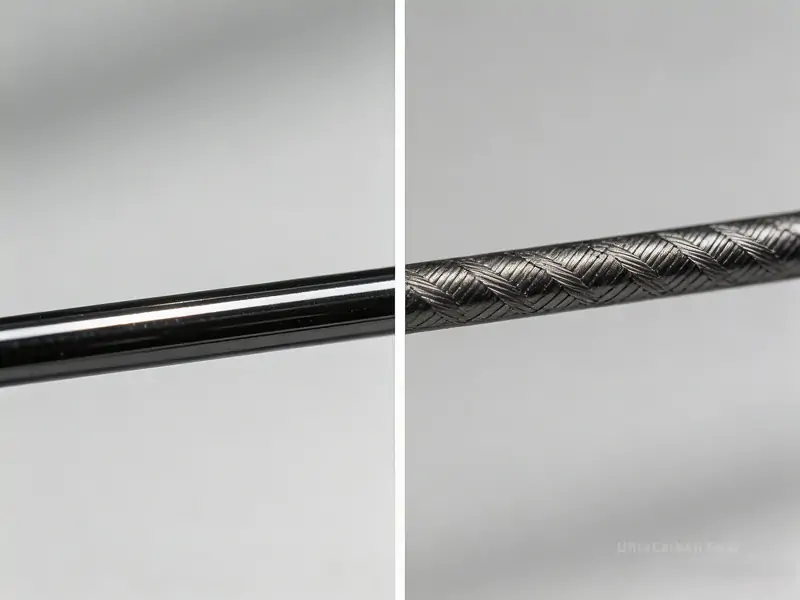
We run the fiber through an electrochemical bath — essentially a controlled mild etching process using an electrolyte. It's not harsh like you'd imagine; it's incredibly precise. The treatment creates tiny, microscopic pits and oxygen-containing functional groups on the fiber surface. These little changes give the resin something to grab onto, increasing the interlaminar shear strength dramatically. Without surface treatment, a carbon fiber composite can delaminate like layers of filo pastry. With it, the resin and fiber act as one solid unit. We measure the surface activity to ensure every batch falls within our tight window. When you buy from us, you're getting fiber that won't let you down in a high-stress part.
Step 5: Sizing — The Protective Coat That Makes Everything Stick
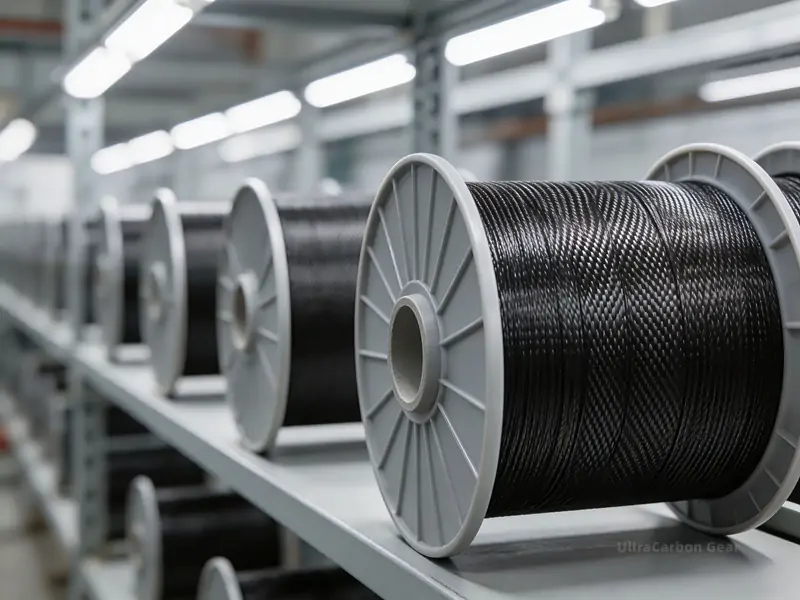
Finally, we get to sizing, and this step is far more important than it gets credit for. Sizing is a thin, carefully formulated coating applied to the fiber before it's wound onto spools. It typically makes up just 0.5% to 1.5% of the fiber weight. People ask "what is carbon fiber sizing made of?" and "how does sizing affect composite properties?" The answer: sizing is often an epoxy-compatible film former, and it does three things. It protects the delicate filaments from fuzziness and breakage during handling and weaving. It acts as a compatibility agent between the fiber and the resin matrix. And it prevents the fiber from absorbing moisture. Without the right sizing, even the best carbon fiber can produce a terrible composite. We match our sizing to the resin system you're most likely to use — epoxy, vinyl ester, or others — and we can even do custom sizing for bulk orders. This means your laminates will have fewer voids and far better mechanical properties right out of the gate.
Bringing It All Together — The Carbon Fiber You Deserve
So now you see: the carbon fiber manufacturing process isn't just "baking plastic." It's oxidation at 200–300°C that stabilizes, carbonization at over 1,000°C that purifies, optional graphitization near 3,000°C that stiffens, surface treatment that etches for grip, and sizing that protects and matches the resin. Each step demands precision, and any shortcut is a liability.
We don't skip steps. Our carbon fiber goes through all these stages under strict quality control, and the result is material that outperforms generic alternatives you'll find elsewhere. Whether you need standard 3K twill fabric for a cosmetic hood, unidirectional tape for a structural component, or ultra-high-modulus sheets for aerospace prototyping, every inch of our product carries this full pedigree.
Now comes the fun part. I've given you the behind-the-scenes tour. If you want to feel this quality in your own hands, head over to our online shop. We've got carbon fiber fabrics, plates, tubes, and custom-cut pieces ready to ship. When you order, you're not just buying carbon fiber — you're buying the result of five carefully managed transformation stages, engineered to perform.
Click through, pick the grade that fits your dream project, and have it on your doorstep in days. I promise, once you work with properly processed carbon fiber, you'll never look back.